54. Retail Isn't the Only Goal: Sustainable Growth for Product-Based Businesses
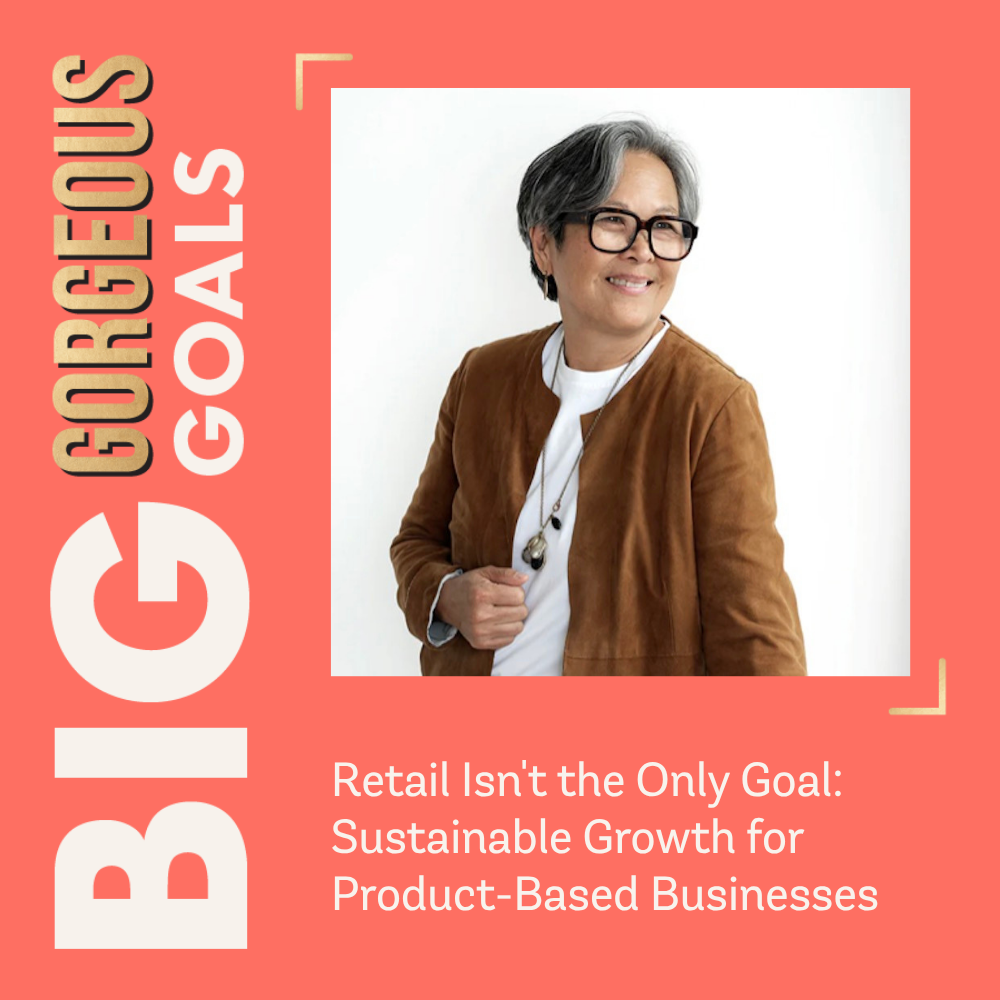
EPISODE 54
In the final episode of this retail strategy series, Kathy Vurinaris and I discuss what it really takes to scale successfully in retail. From product innovation and manufacturing to forecasting and financial planning, we explore the systems and strategies that support sustainable growth.
Catch the Conversation



-
Kathy is a seasoned retail product development executive behind some of Canada's most iconic brands, including Joe Fresh, Club Monaco, and Roots, with experience at major retailers like Sephora and Loblaws.
Inspired by her 88-year-old mother's passion and wisdom, Kathy took on the challenge to confront a societal taboo, and created Sleaks. Scientifically researched, patent-pending washable leakproof underwear that looks and feels like normal underwear. Discreet, affordable, and eco-friendly, Sleaks empowers individuals to live freely while reducing environmental waste.
Kathy's mission is rooted in responsible consumption, environmental stewardship, and helping people live their best lives.
You can connect with Kathy on LinkedIn.
Find out more about Sleaks on their website.
-
0:00
Why Getting Into Retail Isn't the Same as Winning in Retail
6:15
Kathy's Approach to Product Innovation and Manufacturing
9:55
Why Founders Need to Stay Involved in Retail Sales
11:40
Learning Retail: Consultants, Experts, and Hard-Won Lessons
17:30
Kathy's Five-Channel Growth Strategy
20:45
Forecasting, Financial Planning, and Scaling Sustainably
-
Julie 0:12
Welcome to this special three-part series of the Big Gorgeous Goals podcast, focused on one of the biggest decisions many product-based entrepreneurs face. Should you go into retail? I'm Julie Ellis, leadership coach, speaker, author of Big Gorgeous Goals, and co-founder of Mabel's Labels, a business we scaled from a small basement startup into major retail channels across North America. And over the years, I've learned something important about retail. From the outside, it looks like a huge milestone for any brand. The shelf placement, the purchase orders, the visibility, the scale. But behind every product on a shelf is an incredibly complex system of operations, forecasting, margins, logistics, inventory management, manufacturing decisions, retailer expectations, and financial pressure that many of us don't see until we are in it. And that's exactly why I wanted to create this series. Not to convince you that retail is the right path, and not to scare you away from it either, but to help you make informed strategic decisions about whether retail fits your business, your goals, your margins, your operations, and the kind of company you actually want to build.
Julie 1:32
Throughout the series, I'm joined by Kathy Vurinaris, an entrepreneur who is currently building her own product-based business, who is also bringing years of experience from the retailer and consumer packaged goods world. Together, we unpack how to know if you're retail ready, what buyers actually care about, the hidden costs and operational realities of retail, and what it really takes to scale and succeed once you get there. Because growth alone is not the goal. Sustainable growth is. And sometimes the best entrepreneurial decisions are not about moving faster, they're about understanding the path clearly before you take the next step. I'm so glad you're here. Let's dive in.
Julie 2:16
Welcome back to episode three of this really special series on retail strategy for product-based businesses. Throughout this series, we have been unpacking one of the biggest questions many entrepreneurs face. Should I go into retail? In episode one, we talked about readiness. How to know if your business is truly prepared for retail operationally, financially, and strategically. In episode two, we talked about what it actually takes to break in the hidden math, the complexity, the systems, the realities behind the shelves that most consumers and honestly most entrepreneurs never see. But today we're talking about something entirely different. Because getting into retail is not the same thing as succeeding in retail. And scaling in retail is an entirely different skill set. Again, one of the things I've learned through entrepreneurship is that growth has a way of exposing every weak system in your business: a weak supply chain, weak forecasting, weak margins, weak operational processes, weak inventory planning, and weak leadership capacity. Growth shines a spotlight on every corner of your business. And retail accelerates that pressure quickly.
Julie 3:35
In this conversation, Kathy Vurinaris and I talk about what sustainable retail growth actually looks like. Not the fantasy version, but the real operational version. We talk about product iteration and why retailers are constantly looking for newness. We talk about the importance of understanding your manufacturing deeply enough to engineer products specifically for different retail environments while still protecting your margins. We talk about the reality that founders often become the most important salesperson in the room, because nobody can tell the story of a brand the way we as founders can. And maybe most importantly, we talk again about the numbers, the forecasting, margins, channel strategy, inventory planning, cash flow modeling, investment planning. Because one of the clearest themes in this whole conversation is that retail success is deeply tied to operational precision. And that doesn't always sound glamorous because I think we as entrepreneurs, we love product development, branding, marketing vision. But scaling successfully often comes down to spreadsheets, forecasting models, operational discipline, and making decisions long before the market forces you to. Ultimately, this is about building a business that can actually support the vision that you have for it. So whether you're already in retail, considering it someday, or simply trying to build a stronger product-based business overall, I think this episode is going to give you a much deeper understanding about what sustainable growth truly requires. Let's dive in.
Julie 6:13
All right, this is our episode three
Kathy's Approach to Product Innovation and Manufacturing
Julie 6:15
about scaling and winning in retail. And today we are talking about how to find sustainable growth and what you need to have in place in order to manage a big retail portfolio of brands and how you stay on the shelves. So, Kathy, welcome back.
Kathy 6:35
Thank you. Glad to be here.
Julie 6:38
I know it's so good. I'm really enjoying this conversation because I do think it's so interesting. And I think that, you know, ultimately the theme of this is not that people should not go into retail because it can be a great experience, but it's the um, how do you know you're ready? And how do you know that you can make it successful when you do step into retail? Um and yeah.
Kathy 7:06
So so I have so many thoughts now that we've had started. So you sort of tweaked my brain on this. So one of the things that I would say is you need to understand your manufacturing because I think the opportunity to be successful and scale in large retail is being able to build product that's specific to them so that you maintain the margins you need, but the product isn't any very different than your total portfolio.
Julie 7:39
Right. Right. And also they're always going to be looking for newness. So then understanding your manufacturing, how to manage the cost of your manufacturing, like almost reverse engineering engineering so that you are making a product that's almost as good that the consumer doesn't know is slightly different, but you're making the money you need to being in that retailer. Yeah. Yeah. I think that's a really great point. And it is that piece of like, what does newness mean to that retail buyer? Like it's probably not just saying, and now we have another color. Right.
Kathy 8:18
Right. It's like for me, adding lace to the waist or making it more feminine or doing a different cut or whatever, right? So now it's a brief. So should we do a boy short? Should we do a hipster? You know, whatever it is. Um, and so for me, it's, you know, how do I reduce the cost of the manufacturing but make the product as desirable to the customer?
Julie 8:45
Yep. Yep. And when you're manufacturing something overseas that can be a real um challenge in terms of turnaround time and product development work um and even just bandwidth within yourself to actually stay on that path.
Kathy 9:05
Right. I, you know, I am constantly working on new product, not knowing when I'm gonna launch it, but if I have an idea, I'm always working with my factory on developing it and getting it to the point where we can go to manufacturing.
Julie 9:22
Yeah, I would say that was the same with us. We would be pushing multiple things forward with our manufacturer, and then we would say, let's add this one. Let's make uh let's make uh an a multi-pack, let's, you know, and then we could start to yeah, yeah.
Kathy 9:40
So and so you can't just rest on having the one product, you're constantly thinking about how do I iterate, how do I make it better? What's the next version? What is the customer gonna look for? What's the next event that I can create
Why Founders Need to Stay Involved in Retail Sales
Kathy 9:55
a product for? Right? Like, yeah.
Julie 9:57
So yeah. Well, and uh so in terms of like ways of going to retail, do you like a lot of people use distributors? Yeah, um, do you find there that you see that with larger sized retailers?
Kathy 10:13
Yeah, but you know, I it's funny because the person that I had doing sales for me was part of a distributor, like uh and I negotiated that for every closing conversation, I was part of the conversation.
Julie 10:26
Yeah, yeah, yeah. I would say the same when we had uh sales, we had a sales agent in the US, yeah, and we did that as opposed to a distributor because we would take on the day-to-day management afterwards.
Kathy 10:40
Right.
Julie 10:40
But uh, but I was the face of the brand that went to those sales meetings. I was not an expert in selling retail, but I could tell the story of like you know, working till midnight in that basement as we started the brand and what it was like, you know, when the host of The View stood there and said, I could not live without these. And you know, that was my part of the story to tell. So I was an important part.
Kathy 11:05
Right. And I feel that I am as well, right? Like I I own the story. So uh I feel like so so yeah, that's the other thing I think that founders have to understand that they're so integral, they can sell the brand better than anybody else.
Julie 11:24
Yes, always always.
Kathy 11:27
So, yeah, that's why the brand exists, right?
Julie 11:30
And why it's been successful, correct?
Kathy 11:33
Yeah, absolutely. So yeah, I think don't ever forget that.
Julie 11:38
Yeah, yeah.
Learning Retail: Consultants, Experts, and Hard-Won Lessons
Julie 11:40
And so how do you, I mean, so you learned all of this because you came up in the retail world. Um, I learned it because I was fortunate to hire a really great consultant when we went to retail who'd had experience both on the brand side and on the retailer side, which is not always common. And, you know, he really worked with us to help with the sales process, the product build, like all of the things. Um then I feel like I learned so much through Fire and the School of Hard Knocks.
Kathy 12:19
Yeah.
Julie 12:19
But how do people learn who want to go to retail? Because I think that it is um, you know, like you it was a it when I started out, I did not know what I didn't know. Like a hundred percent I have no idea it would be as technical and uh complicated as it was.
Kathy 12:39
Right. Well, you know, I I would say that that is something it's important to either hire a consultant or bring somebody on internally who I who comes from that world. Yeah right. Um, and you know, whether it's somebody who's under operations or I I think that that's the position that to me makes the most sense to bring in an expert with experience in retail.
Julie 13:05
Yeah. Yeah, yeah, yes. And I would say then on my team eventually, um, the consultant faded to more of a at the end of the phone kind of contract from it really involved I had a director of sales and I had an operations manager. And the operations manager was kind of slash analyst. I think you know, we called them an operations manager, but but uh he managed a very big spreadsheet for each retailer that showed us you know velocity and stock, right? Whereas yeah, all of those pieces that we needed to manage.
Kathy 13:39
That that's like it's like your retail success manager, yeah.
Julie 13:43
That's probably a better title, right? Although he did also help with he did also help with uh product coming. Oh, so so it was actually like, and and this is where I tell you that I think it's hard in a small environment to like get the people, right?
Kathy 14:02
Absolutely, and I'm so fortunate that I have the background that I do, right?
Julie 14:07
Definitely. I'm sure you're gonna get a lot of calls after this. Uh but I do think that like it is um, like I said earlier, it can it's a great channel. Um but it takes care and precision and you know, and it is not just like running a direct-to-consumer business. And I think that's the biggest kind of takeaway that I'm getting out of these comp this conversation with you is you know, you've got to, you've got to go into it with your eyes wide open.
Kathy 14:43
And it's really the attention to detail and knowing what details to follow, right? Because so much of what you would look at for direct to consumer would be very different than what you look at for big retailers, right? And so it's like it's like you have to use different parts of your brain. Yeah, it's different metrics, different parts. Totally numbers, it's very numbers driven, right? And if you're not good at numbers, watch out. Hire somebody fast who does.
Julie 15:12
Yeah. Yeah. Well, I think that's a great entrepreneur lesson, period. Is you know, if the numbers aren't your thing, hire somebody fast who who does. Because um, the numbers are really that foundation that that tells you everything, right?
Kathy 15:28
Absolutely. And if you uh ever want outside investment, your numbers have to be really buttoned down. Yes, that's the first place they'll look, right?
Julie 15:38
Yeah, and unfortunately with direct-to-consumer businesses or product-based businesses, I'll call them, it the the investors for us are fewer and farther between than other kinds of businesses.
Kathy 15:51
Absolutely. Yeah, even though, you know, um, you know, if I think about my product, the lifetime value of my customer is really quite large, right? Because they could use my product for 30 years, 100%. Right. And so, um, and that's how I'm trying to sell it.
Julie 16:12
Yeah. Right? Yes, yes, and unfortunately, you don't have 30 years behind you to be to confirm that.
Kathy 16:20
No, but I have statistics about the category that show that, right?
Julie 16:24
And so well, and so, but that's interesting because that's where it's like, you know, you get into this, like, I feel like I'm making these numbers up, but you and you are to some degree, you're forecasting based on a set of assumptions and research that you've done, right? So here's the research, you know that this is true, and therefore for your brand, it means this.
Kathy 16:48
Right.
Julie 16:49
Yeah.
Kathy 16:49
I mean, that's how I have to frame it.
Julie 16:52
Absolutely, it is because yeah, yeah, yeah. And then the second, the second truth is you will never ever meet any forecast you ever make. You will either follow it or exceed. Right. That's just the way it goes.
Kathy 17:06
Absolutely.
Julie 17:07
You will never hit it to the penny or or the number, exactly. Right. I mean, that's just how the world works, right?
Kathy 17:13
And forecasts, like to me, are um they're numbers that are supposed to change almost, right? Yeah. Yeah. So yeah. You're constantly adjusting all of the things that fall below the forecast as the forecast changes. So it's like a
Kathy's Five-Channel Growth Strategy
Kathy 17:30
moving target constantly.
Julie 17:33
Yeah. One of the other things I see with um people getting into retail, which is is like quasi, and that's around, you know, you get onto an e-commerce site. It might be of a big retailer or or an e-commerce only retailer, but the the sort of drop shipping where they never take your product into their warehouse and you're just shipping it from your side. Yeah. Um, what do you know about that?
Kathy 18:01
I've done a little research about that because in my space, there is one that's very big that does that. Um, but so I'm because of my margins again. Like I already know the cost to ship anywhere in Canada. I've I've done all of that research because I do the so because I on our direct to consumer, we offer free shipping under $70, over $70. Um, so I know that how much like this our standard box will cost and all of those things. And I plugged it into. So what I did was I worked on a fully built-out margin on five channels of business, right? So um franchise for franchise reach uh formatted retail, you know, other like just non-franchise retail, um, independent retail, uh, you know, Amazon, yeah, direct to consumer managed by our website. So those are the five. And so within that, with all of our direct to consumer, I did um, I know the cost of each unit that we ship. It's actually come in, I built it in. So I know what the cost of that is. So for that kind of, so in my space, it's well.ca, right? Um for sure. I I uh I've built, I know what the cost of that is.
Julie 19:27
Right.
Kathy 19:28
And so I'm doing five. You know, I evaluated five channels, I built a spreadsheet, I looked at that.
Julie 19:37
Yeah, and I think that um that is what can help you decide, you know, here's channel one, channel two, channel three. It's a three-year five-year strategy to even accessing those, right? That's exactly what I did. Yeah, and I would really encourage people to build those good forecasts because although it seems a little boring, it also is very informative or or not even boring, but intimidating is maybe a better word um to build something like that. But like finding that, you know, CFO or financial analyst who can kind of build you a model that you can then work with as you get better pricing, find new factories, like all of the pieces that go into the journey.
Kathy 20:29
Yeah. Like I already know how much money do I need to make to actually execute into another channel, or do I need outside investment and how much money do I need? Right. And and that's based on monthly sales over three years.
Forecasting, Financial Planning, and Scaling Sustainably
Julie 20:45
Yeah. Yeah. Wow.
Kathy 20:49
Yeah. Most people don't even think that way. But I, you know, that's my background as well, right? I had to do quarterly forecasts for 13 categories of business that I did. My financial deck was 140 pages.
Julie 21:09
Right. Right. So the deep dive is something you're very accustomed to. And I will say, like, one of the reasons I wanted to have this conversation with you is that I know this about you. Every time we talk and we and I learn the things that you're analyzing and looking into and have on a spreadsheet, I'm amazed at your preparedness.
Kathy 21:31
Thank you.
Julie 21:31
Right. And so, but it is it is that like why and we all bring our own backgrounds to these, yeah to our entrepreneurial ventures, right? Yeah. And and there's real value in the background that you have. And so I'm so happy today that you have shared with us uh all the things about retail and what to think about, what to consider and when to go for it, and when to say not yet, or maybe not at all.
Kathy 21:58
Yes, yeah, yeah. A lot of people have built, like I said, huge businesses direct to consumer only.
Julie 22:04
Yeah.
Kathy 22:05
Yeah. So yeah.
Julie 22:08
Good. Well, thank you so much, Kathy. Oh, no. Oh, you're welcome. I'm gonna um tag your site and uh your info in the show notes, and we'll also include a glossary of all the fun retail terms so that people can look that up. But I thank you for joining me for this series of uh selling into retail.
Kathy 22:26
Oh, you're welcome. It was my pleasure. And everybody out there who's considering it, good luck.
Julie 22:32
Thanks, Kathy.
Kathy 22:33
Okay, bye.
Julie 22:36
Thanks so much for joining me in this special series on retail strategy for product-based businesses. I hope these conversations gave you a more honest, practical, and strategic look at what it really takes to grow through retail. And perhaps even more importantly, how to decide whether retail is the next right step for your business at all. One of the things I've learned through entrepreneurship is that there is no single path to building a successful company. Some brands thrive in retail, some thrive direct to consumer, some build hybrid models, and some discover that scaling sustainably means saying not yet, or even not for us. All of those decisions can be smart ones. The key is understanding the realities behind the opportunity so you can build intentionally instead of reactively. If this series sparked questions for you about growth, leadership, scaling, retail strategy, or the operational side of building a product-based business, I'd love to support you further. You can learn more about my work, coaching, speaking, and the Big Gorgeous Goals Framework at www.julieelllis.ca. And if you're a founder navigating growth decisions in real time, you can also learn more about my pocket coaching program. It's a voice note-based coaching designed to give entrepreneurs strategic support, perspective, and decision-making guidance exactly as you need them. Because sometimes the most valuable thing in business, it's not another course or another framework. It's about being able to have the right conversation at the right moment. If you enjoyed this series, I'd love for you to subscribe to the podcast, leave a review, or share it with another entrepreneur who's trying to decide what growth should look like for them. Thanks again for being here. And until next time, keep chasing your Big Gorgeous Goals.